


Industrial mechanical accessories bear continuous high pressure, frequent friction, and complex temperature changes during long-term operation. Most equipment malfunctions do not appear suddenly, but accumulate from tiny structural defects, material instability, and insufficient precision matching that users easily ignore. Many enterprises only focus on surface dimensional specifications when purchasing cast parts, overlooking internal compactness, corrosion resistance, fatigue durability and assembly adaptability, which directly leads to frequent downtime, shortened service life and rising comprehensive maintenance costs. Choosing qualified aluminum alloy die casting components can fundamentally avoid these hidden troubles and stabilize the overall operation of mechanical systems.
Irregular die casting quality is the core hidden danger hidden behind most mechanical failures. Low-grade raw materials, backward molding processes and incomplete pressure control will cause pores, shrinkage cavities and loose internal structures inside cast parts. These invisible defects cannot be detected by simple appearance inspection, but will expand rapidly under vibration and load, resulting in cracking, air leakage, oil leakage and abnormal wear. Ordinary cast products can meet temporary assembly requirements, yet cannot adapt to harsh working environments such as high temperature, humidity and shock, bringing unpredictable safety risks to automated production lines and precision machinery.
Long-term use data shows that mismatched material density and poor dimensional consistency greatly increase the wear rate of supporting mating parts. Unsmooth surface finish increases friction resistance, raises operating temperature, accelerates aging of seals and bearings, and reduces overall transmission efficiency. Mass-produced non-standard customized castings often have deviation errors beyond the acceptable range, requiring secondary polishing and reprocessing on site, wasting labor hours and delaying production progress. Professional customized die casting solutions from professional aluminum die casting manufacturer strictly control each process link to ensure unified tolerance standards and stable physical performance.
Different application scenarios put differentiated strict requirements on aluminum die casting performance. Automotive chassis accessories need high shock resistance and lightweight characteristics, power equipment parts demand high thermal conductivity and pressure resistance, and electronic structural parts require tight dimensional accuracy and anti-oxidation stability. Blindly using universal cast parts will cause performance mismatch, accelerate component damage and increase replacement frequency. Systematic parameter matching and targeted alloy formula adjustment can make die casting parts perfectly adapt to working conditions and maintain stable performance for years.
Cost comparison among die casting products cannot only calculate unit purchase price. Cheap inferior cast parts save upfront expenses, but bring frequent replacement, equipment shutdown loss, maintenance labor cost and production delay loss. High-quality precision die cast parts have longer service cycles, lower failure rate and no frequent follow-up maintenance investment. From the full life cycle of equipment operation, standardized finished castings bring obvious economic advantages and more reliable operation safety, helping enterprises reduce comprehensive operating costs in the long run.
Performance Comparison of Different Aluminum Die Casting Qualities
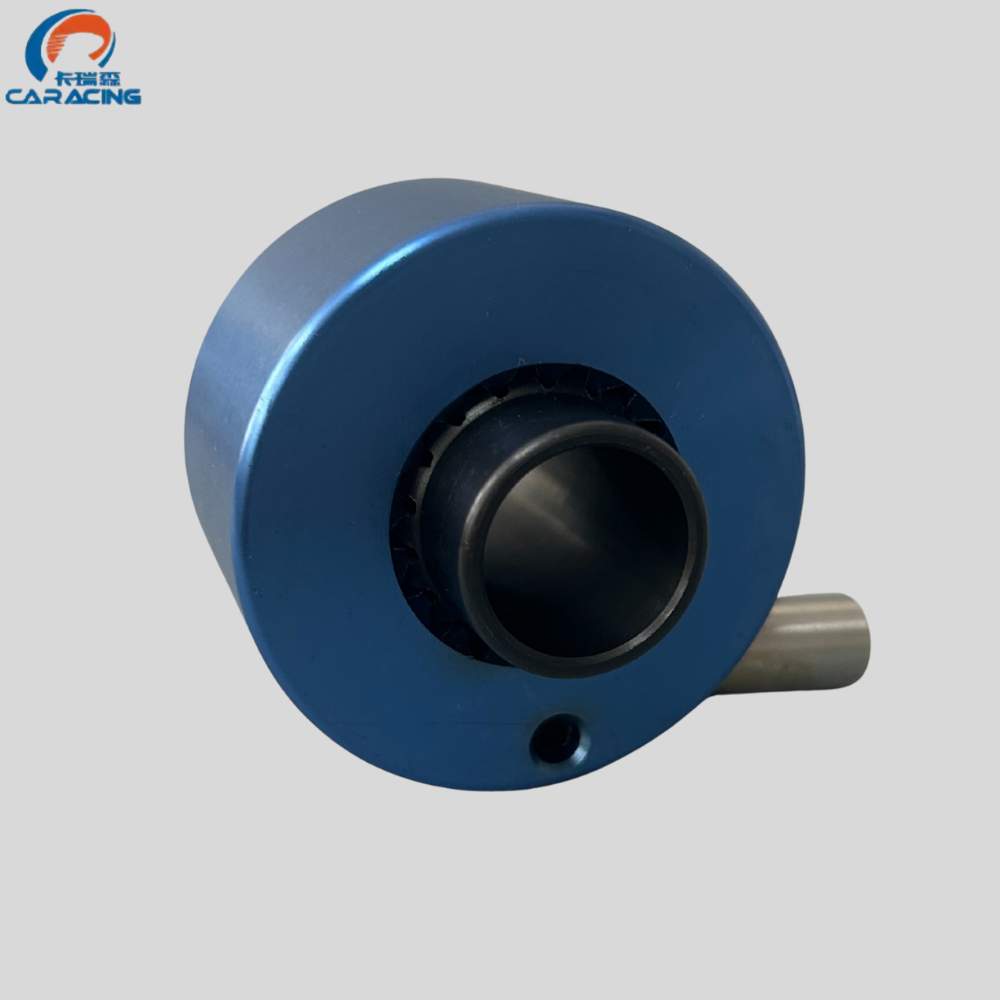
| Performance Index | Ordinary Die Casting Parts | High-Precision Die Casting Parts | Long-Term Practical Impact |
|---|---|---|---|
| Internal Structure Density | Easy pores & loose tissue | Dense structure, no hidden cavities | Prevent cracking and medium leakage |
| Dimensional Tolerance Range | Large deviation, unstable | Ultra-small precision tolerance | No secondary processing, convenient assembly |
| Surface Smoothness | Rough burrs remain | Smooth and flat finish | Low friction, protect matching accessories |
| High Temperature Resistance | Poor, easy deformation | Stable, resist continuous high temperature | Suitable for high-load mechanical operation |
| Corrosion & Oxidation Resistance | Fast rusting and aging | Strong anti-corrosion and weather resistance | Adapt to outdoor and humid industrial environments |
| Fatigue Cycle Life | Short, easy fatigue damage | Ultra-long fatigue resistance | Reduce frequent part replacement costs |
Aluminum alloy has natural advantages of light weight, high strength, good heat dissipation and easy molding, making it the mainstream material for precision mechanical structural parts. Reasonable die casting pressure, cooling speed and mold precision directly determine the final comprehensive performance of finished products. Strict quality testing before leaving the factory includes air tightness testing, hardness detection, size inspection and appearance flaw screening, ensuring every finished product meets industrial-grade use standards without potential quality hazards.
Reasonable customized die casting processes also optimize overall equipment structure design. Lightweight aluminum cast parts reduce the overall weight of mechanical equipment, lower energy consumption during operation, and improve transmission flexibility and response speed. Complex irregular shapes can be integrally molded by die casting, avoiding splicing gaps and structural weakness caused by multiple assembled parts, greatly improving overall structural stability and seismic performance.
In actual industrial production, stable accessory quality directly affects production continuity and product qualification rate. Once key die casting parts fail unexpectedly, the entire assembly line will stop working, causing huge economic losses. Choosing mature, standardized and professionally customized aluminum die casting products can eliminate hidden quality risks from the source, match various mechanical equipment specifications, and maintain stable operation under continuous high-intensity working conditions.
Standardized die casting production follows complete industrial process specifications, realizes batch stable supply, short delivery cycle and consistent batch quality. Enterprises no longer need to spend extra time screening suppliers, adjusting processing parameters and dealing with after-sales quality problems. Reliable aluminum alloy die casting accessories become stable backing support for mechanical operation, improving production efficiency, reducing failure risks and creating sustainable practical value for industrial processing and manufacturing projects.